
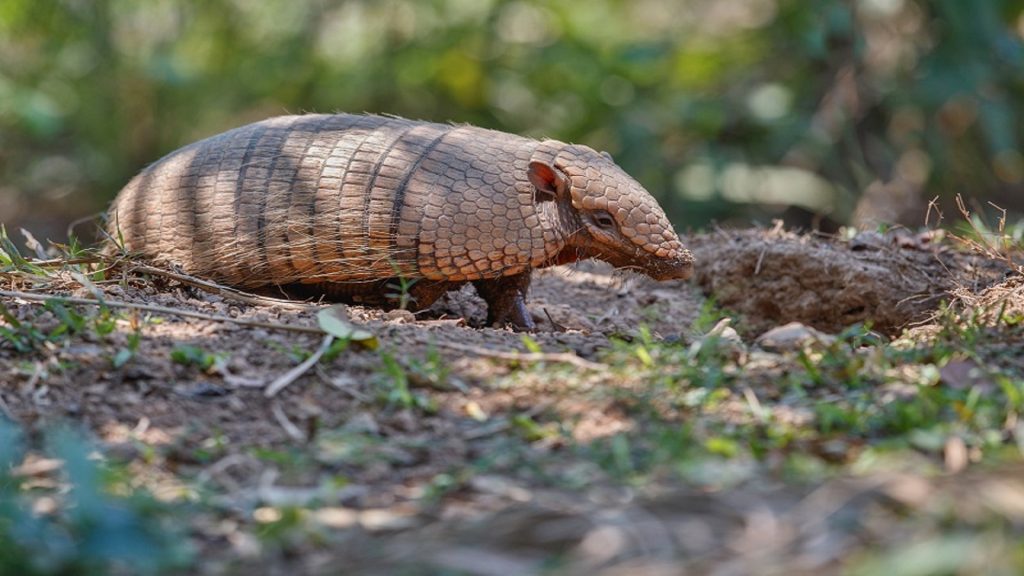
Among the many creatures that inhabit the lush Ecuadorian Amazon, the armadillo stands out for its unique appearance and secretive behavior. With its armored shell, the armadillo seems like a relic of ancient times, a species that has survived thanks to its adaptation and discretion. To learn about it is to discover an essential part of the natural balance of the rainforest.
The armadillo is a nocturnal mammal belonging to the cingulate order and is related to anteaters and sloths. It is characterized by its shell of bony plates covering its body, giving it the appearance of a "living tank." Several species can be found in the Ecuadorian Amazon, the most common being the nine-banded armadillo (Dasypus novemcinctus) and the giant armadillo (Priodontes maximus), although the latter is much rarer and in danger of extinction.
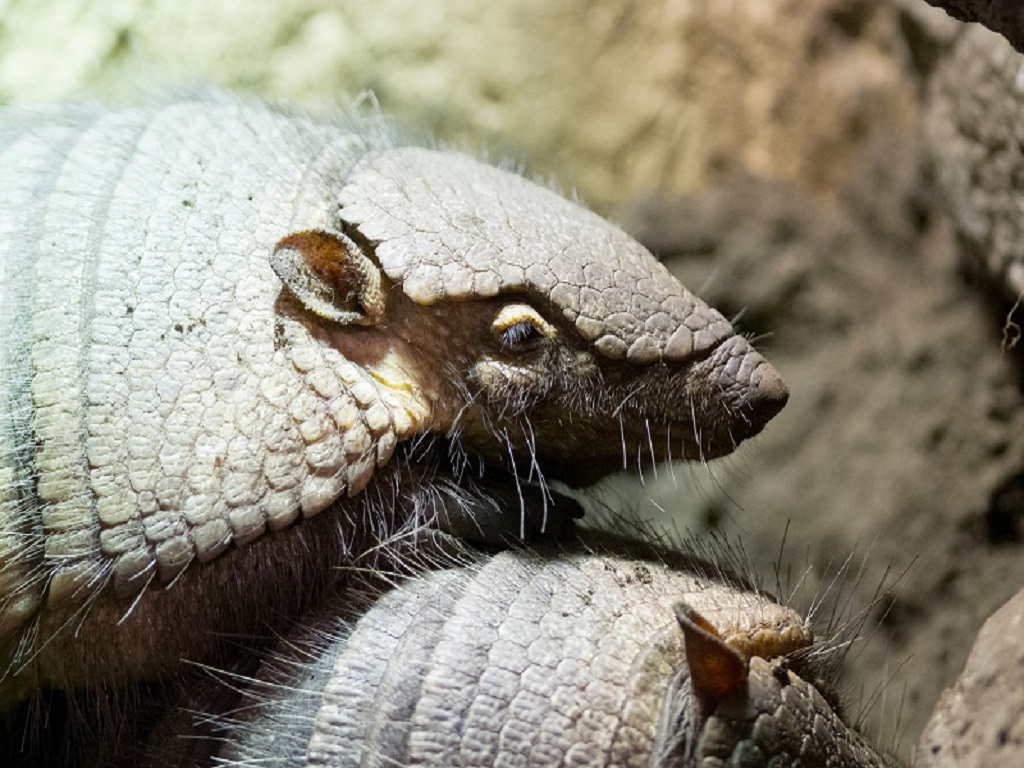
Armadillos are solitary, nocturnal animals that spend the day hidden in burrows and emerge at night in search of food. They have a keen sense of smell and feed primarily on insects, earthworms, fruits, roots, and small invertebrates. With their powerful forelegs, they easily dig through the soft soil of the jungle.
When threatened, many defend themselves by partially coiling or running swiftly into the vegetation. Their shell provides effective protection against predators such as jaguars, snakes, and birds of prey.
Despite their modest size, armadillos play a crucial role in the Amazonian ecosystem. By burrowing into the ground, they aerate the soil, which promotes plant growth. They also control populations of insects and other invertebrates, helping to maintain the natural balance.
Furthermore, the burrows they build are often later used by other species as shelter, increasing the biodiversity of the environment.
In many Amazonian communities, armadillos are hunted for their meat, which, combined with habitat loss due to deforestation, puts several species at risk, especially the giant armadillo. The latter is considered endangered and is rarely seen in the wild.
Some lodges, like Jamu Lodge, have adopted the armadillo's name as a symbol of the connection between responsible tourism and wildlife protection. Observing one in its natural environment is a privilege reserved for those who walk respectfully through the jungle.
The armadillo is much more than a curious, scaly animal: it is an ecological engineer, a millennia-long survivor, and a symbol of the Amazon's natural balance. As you explore the Ecuadorian rainforest, keep your eyes peeled... you might come across this silent guardian of the land.
